Branson, Mo – The pedestrian involved in Friday’s fatal accident on US Highway 65 has been identified as 33-year-old Amber Lawson of Branson.
At approximately 8:29 PM on Friday, August 24, 2018, Branson Police Department along with Branson Fire Department and Taney County Ambulance responded to a vehicle versus pedestrian accident in the northbound lane of U.S. Highway 65 near State Highway 248.
Branson, Mo. – Multiple fatalities have been confirmed involving a capsized ‘Ride the Ducks’ boat on Table Rock Lake. The accident was initially reported as a “mass casualty incident” involving a “tourist type boat” on Table Rock Lake.
Springfield, Mo – Springfield Police are continuing to investigated a shooting that took place on W. Nichols and Davies Street in West Springfield on Wednesday.
Around 4:00 on Wednesday afternoon, police say a black male was seen getting out of a maroon SUV on West Nichols street. He then proceeded to shoot a male victim multiple times while the man was outside of a residence. The suspect then fled the scene in his vehicle, and a witness followed him back to the house where he was later arrested.
Police were able to make contact with the shooter and a relative who was also inside the house, and after a brief period of negotiation, both men were taken into custody without further incident.
At this time, police cannot say what led to shooting, however, they’re hoping to get more answers to these questions as their investigation is still ongoing.
As for one resident in the area who had just moved back to Springfield, he said it makes him nervous to think something like this could happen right outside his front door.
“I saw a black gentlemen jump out a suburban, and then I heard two gun shots and watched the black gentlemen in the suburban kick another gentlemen in the face, I’m kinda scared now to sit on the porch and watch the road cause you never know whats going to happen,” said a Skyler Barnett, a neighbor who saw the shooting take place.
Springfield Police said the suspect and victim appeared to have known each other, leading then to believe this was an isolated incident and there is no danger to the public.
As of Wednesday evening, the victim was still in the hospital, but authorities said they don’t believe his injuries are life threatening.
Branson, MO — (01/05/18) Two teens have pleaded guilty after dragging a kitten by a vehicle in a viral video.
19-year-old Kyle Williams and 20-year-old Jordon Hall of Branson both pleaded guilty to felonies on Friday stemming from a 2017 Facebook post showing the teens torturing a kitten by dragging it behind a motor vehicle.
Christian County Circuit Judge Jennifer Growcock accepted Williams’ plea of guilty to the class E felony of animal abuse and the unclassified felony of armed criminal action, and Hall’s guilty plea to the class E felony of animal abuse. Judge Growcock ordered a sentencing assessment report for each defendant. Hall’s sentencing is set for February 23, 2018 and Williams’ sentencing is set for March 2, 2018.
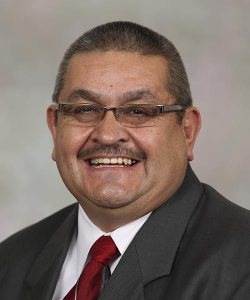
Juan Meraz, Assistant Vice President for Multicultural Services Photo Credit: Missouri State University
Khadijah Forrest, The Black Bear – A group of Missouri State University students are demanding the removal of Juan Meraz, the Assistant Vice President of Multicultural Services, after alleged “inappropriate remarks” by Meraz were made during a recording of a conversation between him and a Hispanic student.
But obstacles remain, considering the rising cost of college and student loan interest rates, which could cause a ripple effect on student’s future wealth. The solutions lean towards investment early on.
An image of Pluto taken on July 13 from the Long Range Reconnaissance Imager (LORRI) aboard NASA’s New Horizons spacecraft. NASA/Johns Hopkins Applied Physics Laboratory/Southwest Research Institute
This week NASA revealed some detailed images of one the farthest objects in the solar system, Pluto. The views came after one of the agency’s space crafts that was launched in January 2006 finally reached its destination.
Parents can be the biggest influence in their children’s lives, which means they are the cornerstone for shaping their child’s body image and relieving some of the insecurities the child may have.
The Finley River from atop the Highway 14 bridge in Ozark on July 9. Credit Scott Harvey, KSMU
The Christian County Commission signed and submitted a letter Monday in hopes of receiving help to repair the damage from this summer’s flooding. The letter was sent to the National Resources Conservation Service in Columbia, MO.
East end of Glass Hall on Missouri State campus Credit Khadijah Forrest, KSMU
Officials will break ground Oct. 15 to begin renovations to Glass Hall on the Missouri State University campus. In June, the Board of Governors authorized the issuance of bonds to construct the planned addition, renovations and improvements to the building, which houses the College of Business.
Gary Whitaker and Missouri State’s President Clif Smart Credit Khadijah Forrest, KSMU
A bi-monthly magazine for local businesses to showcase their success will launch this fall. Gary Whitaker, president of Whitaker Publishing and publisher of 417 Magazine, on Thursday announced the launch of Biz 417.
By Khadijah Forrest , The Black Bear – Missouri State University’s African-American students were at the center of attention during the fall 2014 semester. It began when about 35 students gathered for a silent demonstration during MSU Homecoming’s Bearfest Village on Oct. 18 to bring awareness to police brutality against African-Americans. The demonstration was called “Homecoming Blackout.”
On Nov. 1 in Carrington Hall, student leaders and the Blackout organizers hosted Speak Up Pt. II. The goal was to have an open discussion with students, faculty, and staff on what really happen the day of the silent demonstration and to answer any questions or listen to concerns.
Speak Up, Pt. I was held earlier in the semester, at least a month before Homecoming Blackout. There, students gathered to discuss discrimination and racial tension on campus.
Only a handful of students, faculty and staff were present at Speak Up, Pt. I.
“I think, this time, we had a more diverse group of students, which is great because you want different perspectives when talking about this topic,” said Speak Up organizer and PHA President, Morgan McNeal.
Speak Up, Pt. II attracted an audience three times larger than the first event.
“I think its great that we had more administrators, staff, and faculty to speak on what the university is doing. I definitely think this was a way better turnout than what we had the first time,” said McNeal.
IFC President and Speak Up organizer, Jared Bajkowski was also pleased with how the audience participated in the conversation.
“The distribution and demographics that were present was amazing because I think a lot of people were able to take ownership in this matter… and to see how white people still play a role in this power imbalance,” Bajkowski said.
Speak Up, Pt. II was split into four settings: The nature of the blackout, response of the tailgaters, response of the university, and the increase of student involvement.
Blackout organizer and NPHC President, Robert Colyer, began the event by explaining why Homecoming Blackout had to happen.
Many people had different reactions. Some supported the movement and some were confused on what the purpose of the demonstration was.
Many questioned why more people weren’t aware the demonstration was going to take place.
“Because we just knew someone or something was going to try and get in the way,” said senior Blackout organizer Ryan Johnson.
Dean of Students, Mike Jungers, and Executive Director of Multicultural Programs and Student Diversity, Francine Pratt, were included in the preparation for the demonstration.
They wanted to ensure the safety and well-being of the demonstrators, because no one knew what kind of reactions the tailgaters were going to progress during the event.
The silent protesters said they heard a numerous amount of racial slurs that day. They were told not to retaliate in anyway to any verbal comments or anything physical.
“I never heard the ‘N’ word spoken so many times,” said Coyler.
Some students at the discussion expressed how they no longer felt safe on Missouri State’s campus.
“I do not feel safe on MSU’s campus. I don’t know what to expect every day,” a student said.
Another student said, “I am not scared. What I am concerned with is what [White] people think of me.”
During the silent protest, some of the participants wore masks to hide their identities because they did not feel comfortable showing their faces in fear of what their peers or professors would say to them after the demonstration.
One demonstrator said she feared that if her professors saw her in the demonstration, her grades would drop.
The Black Bear released an exclusive interview with President Clif Smart days after the silent protest and many listeners were either upset or confused by the comments and responses he made about the demonstration.
One of his comments was that the signs the demonstrators held at the protest disappointed him.
Some of the signs read “Hands Up Dont Shoot!” and “Black Lives Matter”.
A student at the discussion, Kelechi Ezeuka, asked President Smart, “Why are the actual signs more controversial than the crimes that inspired them?
President Smart stood up and made a response. But when asked if Ezeuka’s question was answered, she said it wasn’t.
Junior and one of the Speak Up, Pt. II hosts, Jakobi Connor, went on to ask Ezeuka’s question once more. President Smart responded again, but still did not answer her question.
The last issue discussed was what the university is doing to enforce the Public Affairs mission?
Before Speak Up, Pt. 2, Wes Pratt, president of the Office of Institutional Equality and Compliance, said, “Where is the action from the faculty? Our faculty needs to be more engaged.”
Some solutions were to have faculty learn the mission and believe in it, offer more courses to students that teach the mission, other than the standard GEP classes. Another suggestion was for the university, as a whole, to spread more unity throughout campus.
Junior and digital film major, Kiara Taylor, had this to say, “I know there are faculty and staff members that are trying to help and want to help, but there’s also some that don’t. They’re either uneducated on it, or they don’t know how to handle it. They give you politically correct answers, without actually trying to tackle the problems.”
Event organizers ask that if students want to get involved in future events and discussions surrounding issues of racism on campus, to text 314-782-3843. They also ask that you include your first and last name.
Khadijah Forrest, The Black Bear – “Ghetto,” “thugs,” “violent,” “less educated,” “disrespectful,” and “rude” are only some of the stereotypes towards Black Americans mentioned at the discussion “Bridging The Gap” on Wednesday, led by the African Student Association at Missouri State University.
One of many Black History Month events on campus, the “Bridging the Gap” discussion explored the divide between Africans and Black Americans.
Topics discussed were stereotypes made by Africans towards Black Americans and stereotypes made by Black Americans towards Africans.
Kelechi Ezeuka, social media chair of ASA and coordinator of the event, said, “I think we did well discussing the differences but we also discussed similarities and things we valued about the different cultures.”
The mission of the event was to discuss the gap between all Africans and all Black Americans not just African-Americans.
“Not every Black person in that room is directly connected to Africa,” Ezeuka explained. “I think Black American is an umbrella term that applies to all.”
Throughout the discussion, the group steered toward how the media portrays Africans and Black Americans and how their stereotypes are controlled by the media.
One student in the audience responded by saying , “America does not want African-Americans to know about their roots.”
Africans in the media are portrayed as homeless victims of hunger. Members of ASA who were born in various of Africa describes their land as beautiful with many cities and food.
Another audience member pointed out that many Black Americans describe Africa as one big city, rather than a continent.
One of the ASA members asked “Why is the only place in Africa that African-Americans are drawn to is Egypt?”
According to another ASA member, they’re drawn to Egypt because it’s known for kings, queens, and wealth. Also when people go to research African history, images of Egypt are easily accessible.
Further into the discussion the audience learned words that some Africans use to describe African-Americans.
“Abeed” means slaves in Arabic, “Baria” is slaves in Amharic or Ethiopian, “Adoon and “Jareer” also mean slaves in Somali. In addition of being called slaves, the most offensive word to African-Americans is “Akata” which means wild animal in Yoruba.
ASA members explained that the origin of “Akata” came from African elders that thought of African-Americans as cats that were strayed away from Africa. Because they strayed away from Africa, they became wild animals.
During the wrap up of the discussion, ASA members shared the similarities of Africans and Black Americans and how many Black American traditions come from Africa.
“Blackness is a commonality,” Ezeuka said. “Once you emigrate to the United States you adopt all the struggles of a Black American. White people don’t care that your culture is different. All they see is Black skin.”
Khadijah Forrest, The Black Bear – Feb. 7 is National Black HIV/AIDS Awareness Day. According to the official event website, the focus of NBHAAD is to get Blacks educated about the basics of HIV and AIDS in their local communities.
Every year the Association of Black Collegians teams up with AIDS Project of the Ozarks to bring Missouri State Students free screenings for HIV andAIDS for NBHAAD.
MSU students got their HIV screenings provided by APO in the Plaster Student Union this past Friday.
“It’s good to know your status and just know the different ways to contract the disease not only just from having sex but also needles and other things like that,” said Nicholas Nesbitt, President of ABC.
Blacks are more likely to contract HIV than any other race according to the U.S. statistics on aids.gov. Based on the statistics, an estimated 1 in 16 black men and 1 in 32 black women will be diagnosed with HIV infection at some point in their lifetime.
APO specializes in providing HIV and AIDS awareness, onsite rapid testing, office testing, event testing, and counseling to individuals.
“It takes about 40 minutes to go through the process of filling out the assessment, sitting down and allowing us to take two drops of blood for the test and then wait for the test to run,” said Bob Holtkamp, Director of Outreach & Prevention.
After being tested for HIV, the information is confidential and is only shared to the individual getting tested.
Other than, condoms and practicing abstinence, there is a new way to prevent HIV for people at risk.
Pre-exposure prophylaxis, also called PrEP, is a medicine at risk people can take before and after a possible exposure to the disease. At risk includes sharing needles, if your partner is HIV positive, or having unprotected sex.
According to Holtkamp, “For individuals who live within a community that feel they are at a higher risk of acquiring HIV, it is a pill that one takes and the key is taking the medication daily and if you have put yourself at risk it could reduce acquiring HIV by over 90%.”
To learn more information on HIV and AIDS or to find a local testing center, visit gettested.cdc.gov.
Khadijah Forrest, The Black Bear – Ella Fitzgerald, Duke Ellington, Ernie Fields, and so many more legendary talented African-Americans were once all in Springfield enjoying food at the black-owned business Graham’s Rib Station in the 1930s.
Famous for Mrs. Graham’s special barbecue sauce, Graham’s Rib Station was owned and operated by James and Zelma Graham serving African-Americans during the era of segregation.
African-American entertainers and other travelers were lucky enough to have a place to stay overnight by renting out a cabin at Graham’s Tourist Court off Washington and East Chestnut Expressway.
At the time, Graham’s Tourist Court was the only place that would rent rooms to African-Americans in Springfield. One of the cabins are still in existence near Chestnut Expressway.
The largest grocery store in Springfield in 1900 was the Hardrick Brothers Grocery Store which was owned by two African-American families. Another black-owned grocery store around 1900 resided on the north side of Springfield and was called Tindall Market.
In 1871, the first African-American public school was built at the corner of Central and Washington Streets. The school was known as the Colored School until its name was changed to the Old Lincoln School after an exchanging of property with Drury College.
Over the years, Springfield leaders have made efforts to encourage and increase the rate of diversity in the city, but what some people have failed to realized, African-Americans have always been a part of Springfield history.
Joan Hampton-Porter, the History Museum on the Square curator, said, “African-Americans have always been here and it is an overlooked community.”
Currently in downtown Springfield, people can view the “We’ve Always Been Here” exhibit at the Historic Fox Theater on the Square.
This exhibit tells the stories of the African-American community in Greene County.
“We want to make sure people realize the richness, the diversity that built this community,” Hampton-Porter said.
Many people believe that the majority of African-Americans left Springfield in 1906 after the Good Friday lynchings on the square.
According to Hampton-Porter, there are a lot of families in Springfield that never left.
Father Moses Berry, descendant of Daniel Boone and the owner of the Ozarks Afro-American Heritage Museum which closed in 2013, tells the story of the square lynchings in a video presented at the exhibit.
On April 14, 1906, three Black men were lynched on the square after accusations of raping a white woman. The men were dragged from jail and their bodies were hung and burned. Soon after the woman that claimed she was raped confessed that she was not raped by the three men.
“It was a horrible tragedy but there is so much more to the African-American history here than the lynching,” Hampton-Porter explained. “They forget about all the amazing things African-Americans have done here.”
To learn more about how African-Americans contributed to Springfield history, the “We’ve Always Been Here” exhibit is open now through the extended date May 9. Exhibit hours are listed at http://historymuseumonthesquare.org.
Khadijah Forrest, The Black Bear – For the last month, students have been seen showing their bear pride by wearing a trending new shirt that reads “Straight Outta MoState”. The questions that have been raging around campus are “Where did these shirts comes from?” and “How do I get one?”
Senior and marketing management major, Destiny Minor, is not only the face behind the shirts but also the Marketing Executive for the custom apparel business “Trending Prints.”
According to the company website, “Trending Prints” is where people can “find today’s stylish trends on t-shirts and accessories.”
Minor said she is excited and proud about how the business has been successful and is growing,
The idea for the “Straight Outta MoState” t-shirts was brought to Minor by her sorority sister and father after seeing the film “Straight Outta Compton” that was released this past August.
“Its been raging around Missouri State, the world, and a trending topic,” explained Minor.
Trending Prints was founded in St. Louis, Mo by Minor’s father, David Minor, Sr., in 2012. He said he founded this business to introduce his children into the marketing world and to enable them to have a voice and opinion in today’s society.
“One product that I’m trying to push on campus is the “Black Lives Matter” shirts. I feel like it’s a social issue that can be seen, that can be advertised, and shown through these shirts.”
For more information about Trending Prints and how to buy custom apparel, visittrendingprints.com or contact Destiny Minor at destiny.minor@trendingprints.com



 Khadijah Forrest